Miles de estadounidenses están haciendo algo que, sobre el papel, parece imprudente: cancelar el seguro médico que han pagado durante años y reemplazarlo por una membresía de telesalud que cuesta menos que su antiguo copago.
Suena como una pésima idea. Para muchos, es la decisión económica más racional que han tomado en una década.
Esto es lo que impulsa ese cambio, lo que esas personas realmente reciben por su dinero y el detalle estructural que separa a quienes salen beneficiados de quienes quedan arruinados por una sola factura hospitalaria. Adelanto: la diferencia no es la suerte, sino una decisión que toman antes de hacer el cambio.
Qué está impulsando realmente a las personas a cambiar
Empecemos por la prima, la cifra que termina por colmar la paciencia. La cobertura familiar del empleador supera ahora los $25,000 anuales en primas totales, e incluso el deducible de una persona sola promedia $1,886 antes de que el seguro pague algo por la atención habitual (KFF). Hasta alcanzar ese deducible, paga el precio completo de cada consulta además de la prima.
Después aparece la realidad: incluso quienes tienen seguro no pueden permitirse usarlo. En 2024, el 8% de los adultos con seguro todavía retrasó u omitió atención médica por su costo (Peterson-KFF). Y la deuda llega de todas formas: los estadounidenses deben al menos $220 mil millones en facturas médicas, muchas de ellas de personas que pagaron primas durante todo ese tiempo (KFF).
Para millones de personas, el seguro dejó de sentirse como protección y empezó a parecer una suscripción que no pueden cancelar y nunca consiguen utilizar. Así que algunas lo están cancelando.
Haga las cuentas de un cambio real
Pongamos cifras reales. Supongamos que una pareja que trabaja por cuenta propia paga $1,600 al mes por un plan integral que usa principalmente para alguna consulta por enfermedad. Son $19,200 al año, la mayor parte para protegerse de una catástrofe que no ha ocurrido.
Ahora reconstruya esa cobertura en dos capas. Un plan catastrófico básico podría costar entre $400 y $600 al mes y seguir cubriendo emergencias hospitalarias; una membresía añade alrededor de $75 por consultas cotidianas ilimitadas de $0. Aproximadamente entre $8,000 y $9,000 al año por la misma protección real más un mejor acceso a la atención cotidiana.
Una diferencia de casi $10,000 al año explica por qué algunas personas están dispuestas a parecer imprudentes. Cuando alguien decide dejar un seguro médico integral costoso y reconstruir su cobertura de forma más sencilla, el ahorro no es pequeño. Estas cifras son ilustrativas, no una cotización; las suyas dependerán de su edad, estado y salud, pero esa estructura de costos impulsa la tendencia. Destinar incluso la mitad de esa diferencia a un fondo permite crear una reserva real para emergencias, precisamente lo que hace viable un plan con deducible alto.
A qué están cambiando
En lugar de la prima, una membresía mensual fija, a menudo de menos de $50, que cubre la atención que realmente utilizan.
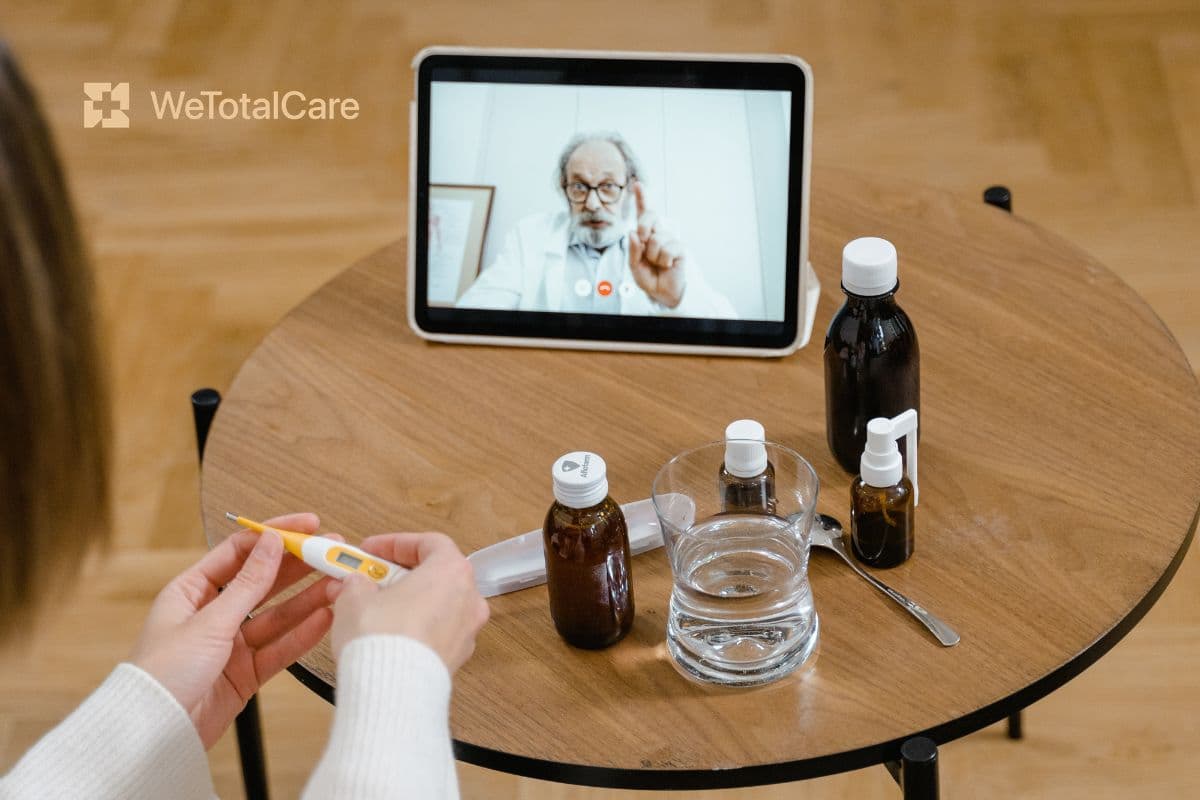
Una membresía de telesalud le conecta por video con un profesional autorizado en unos cinco minutos, a cualquier hora, por $0 por consulta. Sinusitis, infecciones urinarias, sarpullidos, la fiebre de un hijo a las 11 p. m. y renovaciones de recetas se atienden sin copago, reclamación ni deducible de por medio. Una atención virtual asequible que responde cuando la necesita parece pertenecer a otro mundo frente a un plan por el que tiene que luchar para usarlo.
Para la atención habitual y frecuente que constituye la mayoría de las consultas, pagar una membresía y consultar por internet a un médico de pago directo suele ser más barato y siempre más rápido que tramitarlo con el seguro. Las personas no se equivocan al decir que esta parte funciona mejor. Para la atención cotidiana, así es. Una consulta que antes exigía medio día sin trabajar y un cargo de $150 se convierte en cinco minutos con el teléfono y ningún pago al terminar.
Lo que omiten los titulares
Esta es la parte que determina si la tendencia es una buena idea o un desastre para cada persona. Los estadounidenses que lo logran y salen beneficiados casi nunca se quedan completamente sin seguro.
Una membresía de telesalud no es un seguro médico. Cubre la atención cotidiana, no una hospitalización, cirugía, ambulancia, visita a emergencias ni diagnóstico de cáncer. Un solo acontecimiento grave puede costar cinco o seis cifras, y una membresía nunca se diseñó para absorber ese gasto.
Por eso la versión inteligente de este cambio mantiene una protección de respaldo. En lugar de eliminar toda la cobertura, quienes salen beneficiados cambian su plan integral costoso por un plan catastrófico o de deducible alto más sencillo y económico, y añaden una membresía para la atención cotidiana. El plan básico atiende la catástrofe. La membresía atiende lo demás. Dos capas económicas sustituyen a una costosa.
Si omite esa segunda capa y se queda completamente sin cobertura, las cuentas se vuelven difíciles rápidamente. Los adultos sin seguro tienen mucha más probabilidad de cargar con deuda médica: el 62% frente al 44% de los asegurados, y la mayoría no podría pagar una emergencia de $2,000 si ocurriera (KFF). Peor aún, omiten más atención y presentan mayor mortalidad cuando terminan hospitalizados (KFF). Quedarse sin ninguna cobertura no es un truco para facilitarse la vida; es una apuesta cuyas pérdidas la mayoría no puede asumir. La diferencia entre conservar una capa catastrófica y no tener nada lo determina todo. Si lo hace bien, la tendencia tiene sentido. Si lo hace mal, un diagnóstico grave anula años de ahorro.
Cómo organizan realmente su cobertura quienes salen beneficiados
Hecho de forma deliberada, el cambio a dos capas es una estrategia real, no un atajo. Este es el patrón que funciona:
- Cotice un plan catastrófico o con deducible alto que cubra hospitalizaciones, cirugías y emergencias, y confirme la cobertura antes de cambiar nada
- Compruebe si reúne los requisitos para recibir subsidios de la ACA, porque un plan subsidiado puede costar mucho menos de lo que la mayoría espera
- Añada una membresía de telesalud para la atención cotidiana, de modo que las consultas habituales dejen de pasar por el seguro que apenas utilizaba
- Nunca cancele su plan actual hasta que la nueva cobertura y la membresía estén activas y se lo hayan confirmado por escrito
Si sigue ese orden, pagará menos por la atención cotidiana, seguirá protegido ante lo catastrófico y dejará atrás la prima que originó todo esto. La guía de funcionamiento explica de principio a fin la parte de la membresía.
Quiénes están haciendo este cambio
Entre quienes cambian se observa un patrón, y no es difícil entender por qué.
- Trabajadores independientes, de trabajos por encargo y por cuenta propia que afrontan primas enormes por una cobertura que nadie subsidia por ellos
- Adultos sanos que rara vez utilizan el seguro para algo importante, pero desean atención cotidiana rápida y asequible cuando la necesitan
- Personas que ya tienen planes con deducibles altos, pagan el precio completo de las consultas habituales y buscan una forma más económica de recibirlas
Todos tienen algo en común: pagan una fortuna por un plan que apenas usan y prefieren destinar ese dinero a la atención que sí utilizan, sin renunciar completamente a su protección.
Qué cambia realmente en el día a día
Más allá de las cuentas, el cambio transforma cómo se vive la atención médica.
Se acabó posponer consultas porque el deducible convierte cada cita en una factura. Se acabó llamar una y otra vez a números de un directorio de la red. Se acabó abrir una explicación de beneficios como si fuera una exigencia de rescate. Una membresía convierte la atención cotidiana en algo que simplemente utiliza, como cualquier otra suscripción.
Mientras tanto, el plan catastrófico pasa a segundo plano, donde corresponde. No presenta reclamaciones por consultas habituales ni discute un copago de $40. Paga una cantidad pequeña y previsible por la atención cotidiana y conserva cobertura real para el día en que verdaderamente la necesite. Para muchas personas, dejar de temer la atención y simplemente recibirla importa tanto como el dinero.
Preguntas que conviene hacer primero
¿De verdad puedo reemplazar mi seguro médico por una membresía de telesalud?
Para la atención cotidiana, una membresía puede asumir esa función. Para hospitalizaciones, cirugías y emergencias, no puede hacerlo; por eso quienes hacen este cambio conservan un plan catastrófico para lo grave. Reemplazar un plan integral por uno más económico más una membresía funciona. Reemplazarlo por nada es donde las personas resultan perjudicadas.
¿Una membresía de telesalud es un seguro?
Son dos herramientas distintas. Una membresía compra acceso y consultas cotidianas de $0, mientras el seguro ofrece protección frente a facturas catastróficas. Una organización sensata utiliza ambos, cada uno para lo que hace bien.
¿Cuánto ahorran realmente las personas con este cambio?
Varía según su plan, salud y estado, así que haga sus propias cuentas. Para muchas personas, un plan catastrófico básico más una membresía de entre $25 y $55 cuesta significativamente menos que un plan integral completo. Para quienes tienen una buena cobertura del empleador o subsidiada, el plan tradicional puede seguir siendo mejor. Encontrará más información sobre los precios de las membresías en la página de preguntas frecuentes.
¿Qué pasa si enfermo gravemente después de dejar mi cobertura completa?
La cobertura catastrófica existe precisamente para eso, por lo que omitirla es el error. Con un plan catastrófico, las grandes facturas siguen teniendo límites. Sin ninguna cobertura, una sola hospitalización puede generar decenas de miles de dólares facturados directamente a usted. Mantener esa protección es el punto fundamental.
¿La atención virtual asequible es suficientemente buena para confiar en ella?
Para los problemas cotidianos que atiende, sí, y la prestan profesionales autorizados de EE. UU. . Una videoconsulta permite tratar bien infecciones, sarpullidos y necesidades de medicación, y el profesional explica claramente cuándo algo requiere atención presencial. Reconocer ese límite forma parte de una buena atención.
¿No recibiré una penalización por no tener un seguro «real»?
La penalización fiscal federal por falta de cobertura se redujo a cero en 2019, aunque algunos estados tienen sus propios requisitos con sanciones, así que compruebe las normas de su estado. En cualquier caso, un plan catastrófico o de deducible alto cuenta como cobertura real y evita esa cuestión, otra razón por la que el enfoque de dos capas supera a quedarse completamente sin seguro.
¿Sigo necesitando un médico habitual?
La mayoría conserva uno, y vale la pena. Una membresía y un médico por internet de pago directo cubren la atención cotidiana rápida, mientras un médico de atención primaria y un plan catastrófico atienden el panorama general. Combinarlos es mejor que apostarlo todo a una sola opción. Para preguntas, visite la página de contacto.
Seguir la tendencia sin asumir el riesgo
La frustración que aleja a miles de estadounidenses de los seguros tradicionales es real, y una membresía de telesalud ofrece una respuesta legítima a buena parte de ella. Para la atención cotidiana, resulta más barata, rápida y menos frustrante que el plan con el que lleva luchando. Empiece con una membresía para esa parte de la atención.
Pero no confunda dejar un plan integral demasiado caro con renunciar a toda protección. Conserve un plan catastrófico básico para emergencias y use una membresía para la atención cotidiana: así obtendrá el ahorro buscado sin el riesgo que arruina el resultado. Haga ambas cosas y seguirá el ejemplo de quienes realmente salen beneficiados. Nadie recuerda la prima que no pagó. Todos recuerdan la factura hospitalaria que no pudieron pagar.
Compare qué cubre una membresía en la planes y precios página y después cotice un plan catastrófico que la complemente.



Aviso médico
Este artículo tiene fines educativos generales y no constituye asesoramiento médico, diagnóstico ni recomendación de tratamiento. No sustituye la atención de un profesional cualificado. Los tratamientos con receta solo están disponibles después de una evaluación por un profesional autorizado, quien determina si una terapia es apropiada para usted. Los resultados individuales varían. Si tiene una emergencia médica, llame al 911.
Habla con un profesional autorizado
Descubre qué es adecuado para ti: atención virtual desde $24.99 al mes.