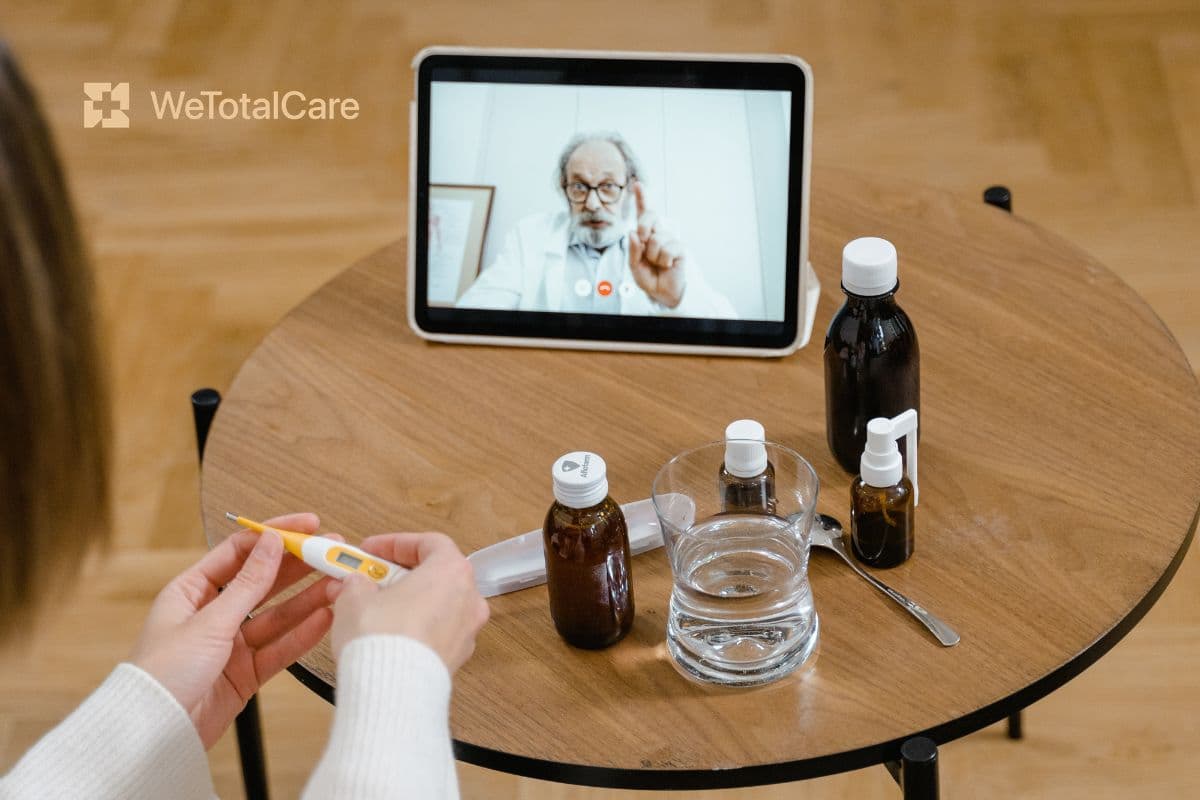
Think about the last time you saw a doctor. Odds are something was wrong: a fever, an infection, a pain that wouldn't quit. You went because your body raised a flag, and the visit dealt with the flag.
Call that reactive care, and it's most of what the system does. Something breaks, someone patches it. Useful, necessary, and only half the picture.
Then there's the other half, the stuff nobody schedules a sick visit for: the weight you've wanted to lose, the energy that's been flat for a year, the slow project of aging well. Goals, not emergencies.
Here's the idea behind a telehealth wellness membership: one place for everyday medical care, with provider-guided programs alongside it for the goals a sick visit never touches. Here's the difference between the two halves, and where each actually fits.
Reactive care and proactive goals are different jobs
Reactive medicine answers a question your body already asked. You feel sick, you get seen, you get treated. Every part of that model waits for a problem to appear before it does anything.
Proactive care starts from the other end. Rather than waiting for something to break, it works on what you want to change while you still feel fine: weight that's crept up, energy that's faded, staying ahead of the slow drift of aging.
Both matter. A system that only does the first leaves plenty of people managing their goals alone, with supplements off the internet and advice from strangers. Bringing a licensed provider onto the proactive side is the shift worth paying attention to.
What 'treating your goals' actually means
Proactive care isn't a supplement subscription or an influencer's protocol. Done right, it is medical care: a licensed provider, an evaluation, and a plan matched to you.
WeTotalCare runs this as a set of provider-guided programs, separate from the membership and priced on their own: weight management, hormone therapy, sexual health, hair, and longevity support. Each one is built as a medically supervised wellness program, meaning a licensed provider reviews your history and goals before anything else happens.
One pattern repeats across all of them. You complete an eligibility check and a secure intake, a provider evaluates whether the program fits you, and nothing gets prescribed or shipped without that sign-off. Not everyone qualifies, which is exactly what you want from real medical care.
Medically supervised weight management
Weight is where the proactive shift shows up most. Obesity is a common, serious chronic condition affecting more than 2 in 5 U.S. adults (CDC), and it raises the risk of type 2 diabetes, heart disease, and a long list of other conditions (NIDDK). Treating it is medicine, not vanity.
Programs people ask about most use GLP-1 medications, the class that includes semaglutide and tirzepatide. Working with an online weight loss doctor, you get evaluated for eligibility, matched to an appropriate medication and dose if you qualify, and monitored over time. A provider selects the dose, not a checkout page. WeTotalCare's weight management program runs on that structure.
Two honest points, because this area is full of noise. First, these are real medications with real side effects, commonly nausea and other gastrointestinal issues, and they aren't right for everyone. Second, the FDA has flagged serious safety risks with compounded and unapproved GLP-1 products sold online, many tied to dosing errors, and advises getting these medications only through licensed providers and state-licensed pharmacies (FDA). Compounded medications are not reviewed or approved by the FDA. Supervision is the entire point: a licensed provider and a licensed pharmacy are what separate a real program from a gamble.
Hormone therapy, evaluated properly
Hormone therapy follows the same logic. For people with genuinely low hormone levels tied to a medical condition, treatment can be legitimate and helpful. For everyone else, it is a decision that needs a real workup, not a quick yes.
Pursuing hormone therapy online through a supervised program means labs, a provider review, and honest expectations. Testosterone therapy, as one example, is FDA-approved specifically for low levels caused by a medical condition rather than as a general anti-aging or energy booster, and it calls for ongoing monitoring, including blood pressure (FDA). A responsible program tells you when the evidence supports treatment and when it doesn't.
Candor like that is the line between medicine and a sales funnel. A provider who runs your labs and says 'you don't need this' is doing the job correctly.
Beyond weight and hormones
Weight and hormones get the headlines, but a telehealth wellness membership reaches further than that. Sexual health, hair restoration, and longevity support round out the menu, each running as a medically supervised wellness program on the same provider-gated model: an eligibility check, a licensed provider's review, and treatment only when it's appropriate. Peptide and NAD+ protocols fall here too, an area where careful oversight matters even more, because the marketing tends to run well ahead of the evidence.
One common thread runs through all of it, and it isn't a specific drug. A licensed provider deciding what fits you, and declining what doesn't, is what turns any of this into medicine rather than a shopping cart.
Where the membership actually fits
Here's the part that trips people up, so let's be exact. Wellness programs are not included in a membership, and being clear about that matters. Each is priced on its own, paid once with the consultation included, and you do not need to be a member to buy one.
So why connect them at all? Because everyday care and goal-oriented care both work better with the same provider relationship behind them. A virtual primary care membership gives you unlimited $0 visits, labs, and a provider who knows your history, and that history is exactly what makes a weight or hormone evaluation sharper. One side informs the other.
Practically, a lot of people start with a virtual primary care membership for the everyday coverage, then add a program when a specific goal comes into focus. A telehealth wellness membership works best that way: membership first, programs as needed, each priced clearly.
Before you sign up for anything
A few things worth saying plainly before anyone signs up for anything.
Programs like these are medical, not magic. Results vary, every medication carries risks, and a provider decides what's appropriate for you after an evaluation. Not everyone qualifies, and 'no' is sometimes the right answer.
A membership is not health insurance, and neither are the programs. Keep real coverage for hospitalizations and major events. And none of this replaces an in-person doctor when your situation needs hands, imaging, or a physical exam.
On medications specifically: compounded versions are not FDA-approved, the FDA has warned about unapproved GLP-1 products sold online, and the safe path runs through licensed providers and licensed pharmacies. Ask questions, read the risks, and treat any program promising guaranteed results as a red flag.
How to think about it for your own health
A simple way to sort this out, and the how-it-works guide fills in the mechanics:
- Start with your actual goals, whether that means everyday medical access, weight management, hormone concerns, or staying ahead of problems
- Expect a real evaluation, since any legitimate program screens you for eligibility and can decline you when treatment isn't appropriate
- Keep your insurance and your primary doctor, because a membership and these programs complement real coverage rather than replacing it
- Treat guarantees, pressure, and no-evaluation offers as warning signs, and choose licensed providers and licensed pharmacies every single time
Handled that way, proactive care is just good medicine aimed a little further upstream.
Questions worth asking
Is this just a way to get Ozempic or testosterone online?
A real evaluation stands between you and any prescription. A licensed provider reviews your history, decides whether a medication is appropriate, and can decline you. Screening, dosing, and monitoring are what separate a medical program from a vending machine.
Are the wellness programs included in my membership?
Separate, actually. Programs are priced on their own and paid once with the consultation included, and you don't even need a membership to buy one. Members often add them because a shared provider relationship makes the evaluation better, not because they come bundled.
Do I need a membership to start a program?
Membership isn't required for the programs at all. You can buy a weight or hormone program on its own, consultation included. Plenty of people still keep a membership for the everyday care, which is a separate decision covered on the FAQ page.
How does getting hormone therapy online actually work?
Labs first, then a provider review. Getting hormone therapy online through a legitimate program means testing your levels, a clinician reading those results against your symptoms and history, and treatment only if it's warranted and safe for you. Skipping the bloodwork would be a red flag.
Are compounded medications safe?
Compounded medications are not reviewed or approved by the FDA, and the agency has warned about risks with unapproved GLP-1 products, many tied to dosing errors. Getting them through a licensed provider and a state-licensed pharmacy, with proper dosing and monitoring, is the safeguard that matters. Ask your provider directly about the specific product and its risks.
Will a program guarantee results?
Guarantees are a warning sign in medicine, and no honest program offers them. Results vary from person to person, medications work differently for different people, and a provider can only tell you what's realistic for your situation. Anyone promising a specific outcome is selling, not treating.
Does an online weight loss doctor replace my regular physician?
For a specific goal like weight, a supervised program covers that lane well, but it doesn't replace in-person medicine when you need hands-on care, imaging, or a physical exam. Most people use it alongside a regular doctor, not instead of one, and questions go to the contact page.
Two halves of the same health
Your doctor treating your illness and a provider helping with your goals aren't competing ideas. Together they're two halves of the same job: staying healthy, not just getting un-sick.
A telehealth wellness membership covers the everyday medical care, and provider-guided programs handle the goals a sick visit never reaches, each with a licensed provider in the loop and each priced clearly. Start with the care, add a program when a goal comes into focus, and keep real insurance underneath all of it.
See how the membership and the programs work together on the plans and programs page.



Medical disclaimer
This article is for general educational purposes only and is not medical advice, a diagnosis, or a treatment recommendation. It is not a substitute for care from a qualified professional. Prescription treatments are available only after evaluation by a licensed provider, who determines whether a therapy is appropriate for you. Individual results vary. If you have a medical emergency, call 911.
Talk to a licensed provider
See what's right for you, virtual care from $24.99/mo.