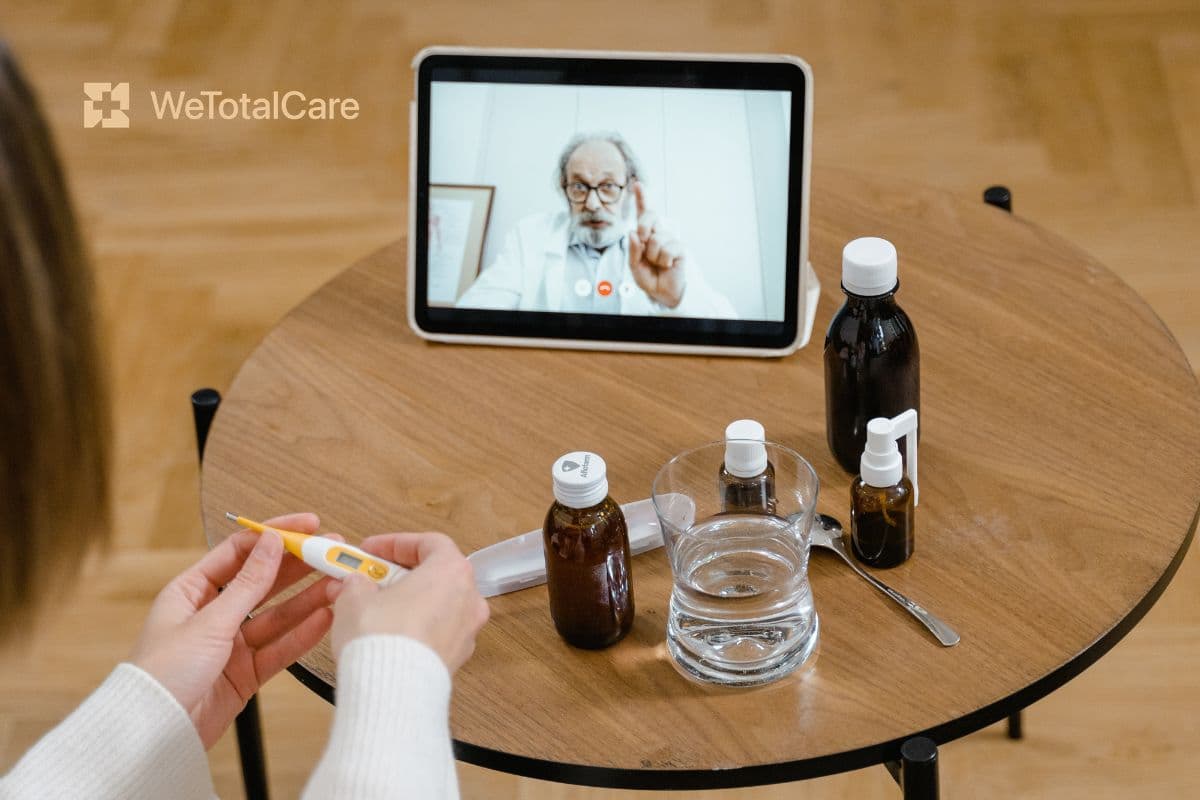
You feel a sinus infection coming on. You've had it before, you know exactly what clears it up, and you just need someone to call in a prescription.
So you phone your doctor's office. Closed. You try the patient portal. Two-day callback. You think about urgent care, then remember your deductible reset in January and you're nowhere near meeting it, so that visit comes straight out of pocket anyway.
Somewhere in that loop, a reasonable person starts wondering what exactly they're paying for.
Health insurance was built for catastrophe: the surgery, the hospital stay, the diagnosis nobody sees coming. For a sinus infection, it's a clumsy and expensive tool. A growing number of people now handle their everyday care a different way, through a telehealth membership plan that skips the copay, the claim form, and the waiting room entirely.
Where insurance quietly fails everyday care
Start with the deductible. In 2025, the average annual deductible for someone with single employer coverage sits at $1,886, and 88% of those workers have one (KFF). Until you spend that much, insurance pays for almost nothing. A doctor visit, a strep test, a round of antibiotics, all of it comes out of your pocket at full price.
So people skip care. Even insured people. In 2024, 8% of insured adults still delayed or went without medical care because of cost, and among the uninsured that jumped to 31% (Peterson-KFF). Coverage on paper doesn't erase the bill at the counter.
And when people do get care, the bills stack up. Americans owe at least $220 billion in medical debt, with roughly one in ten adults carrying a significant balance (KFF). Plenty of them are insured. Insurance turned out to be a thinner shield than they expected.
None of this means insurance is worthless. For a heart attack or a cancer diagnosis, it's the only thing standing between you and financial ruin. Trouble shows up on the small stuff, the routine visits and refills that make up most of what a healthy household actually needs, where a deductible and a copay turn a $15 problem into a $150 afternoon.
Skipping care is the expensive part
Cost doesn't just annoy people, it changes what they do.
A record share of Americans now put off medical treatment because of what it might cost, and most of those delays are for conditions people consider serious (Gallup).
Delay rarely makes anything cheaper. A sinus infection ignored for a week turns into a course of stronger antibiotics. A mole nobody looked at becomes a harder conversation. Skipped blood-pressure refills become an ER visit. Whatever you dodged in March shows up larger in July.
So the real cost of a $150 copay isn't really the $150. What stings is the visits people talk themselves out of, and the problems that quietly worsen while they wait. Affordable virtual care exists to pull that hesitation out of the decision entirely.
What a telehealth membership plan actually is
Forget claims for a second. A membership works like a subscription: one flat monthly fee, and your visits cost nothing on top of it. No copay at the visit, no deductible to clear first, no claim to file afterward, no prior authorization for a video call about a rash.
WeTotalCare runs three tiers, starting at $24.99 a month for on-demand urgent care and climbing to a full virtual primary care membership with labs and $0 medications. No insurance card needed to sign up, because no insurance is involved. You pay a provider directly for access, which is the whole idea behind seeing a cash pay doctor online: one flat, known price, no third party in the middle. New to the model? WeTotalCare's membership overview lays out what it replaces.
Everything happens over video. You connect with a licensed U.S. provider in about five minutes, describe what's wrong, and get a treatment plan or a prescription sent to your pharmacy. Nights, weekends, holidays, all 50 states. Every session runs on a HIPAA-compliant, LegitScript-certified platform, so 'simpler' doesn't mean 'sketchier.'
Why it beats using insurance for the small stuff
Predictable cost is the headline. You know the price before you log on, every time, because the price is zero. No surprise invoice three weeks later, no reading an explanation-of-benefits statement like it's written in code.
Speed is the next piece. Skipping the waiting room means care in minutes instead of a half-day off work. Affordable virtual care that fits a weeknight beats a clinic you can only reach between nine and five.
Then there's the mental overhead. No network directories to cross-check, no 'is this covered' phone calls, no appealing a denied claim. Friction is what makes people avoid care in the first place, and most of it simply disappears here.
Now the honest part: a membership is not insurance
Here's where a lot of marketing gets slippery, so let's be plain. A telehealth membership is not health insurance, and it never claims to be. Hospital stays, surgery, an ER visit, chemotherapy, the six-figure bill after something serious, none of that is covered. Anyone who drops real coverage to lean on a membership alone is making a genuinely dangerous bet.
Smart setups pair the two. Keep a catastrophic or high-deductible plan for the disasters that actually require insurance, and use a membership for the everyday care insurance handles so badly. One protects your savings from a car crash. And the membership keeps you from skipping a $15 strep test because the visit would cost $150.
Same caution on the discount extras. Savings on dental, vision, and imaging run through third-party networks, and those are not coverage either. Treat them as a bonus, never as a reason to drop the insurance you actually need.
Who this actually makes sense for
A few groups get outsized value here.
- Uninsured people who want dependable everyday care, since a membership turns healthcare without insurance into a flat, plannable monthly cost
- Anyone stuck with a high-deductible plan they never actually meet, paying full freight for routine visits all year regardless
- Freelancers, gig workers, and the self-employed who buy their own coverage and feel every single dollar of it
- Busy families who need care at odd hours and can't stomach a copay every time a kid spikes a fever on a Sunday
People who already skip care to save money are the clearest case of all. When a visit costs nothing, the calculation that keeps them home vanishes, and small problems get handled before they grow into expensive ones. Getting healthcare without insurance stops being a nervous improvisation and starts being a plan.
What the numbers look like side by side
Run a rough comparison. A full virtual primary care membership costs about $54.99 a month, roughly $660 a year, and every visit inside it is free. Against that, a single employer deductible averages $1,886 before insurance covers routine care at all, on top of the premiums you already pay.
For someone who mostly needs primary care, urgent visits, and regular prescriptions, a telehealth membership plan often wins outright, and it wins before you count the surprise bills it quietly prevents. For someone who barely sees a doctor, the $24.99 urgent-care tier may be plenty.
Picture a normal year for a family of three: a couple of sick-kid visits, one adult with a sinus infection, two prescription refills a month. Run through insurance with an unmet deductible, that adds up to several hundred dollars out of pocket, easily. Run through a membership, the visits are free and the refills may be too. Same care, wildly different receipt.
Overbuying helps nobody, and neither does underbuying. Match the tier to how your household actually uses care, side by side on the plans and pricing page.
How to make the switch
Switching costs nothing and takes about five minutes.
- Pick the tier that fits how often your household needs care, from on-demand urgent care up to full primary care
- Open a secure account and complete a short HIPAA-compliant intake so your provider has your history up front
- Keep your catastrophic or high-deductible plan for major events, and route the everyday care through your membership
No open-enrollment window, no waiting period. You can start today and cancel anytime, since no contract holds you in. WeTotalCare's how-it-works guide walks through setup end to end.
Questions worth asking first
Does a telehealth membership replace my health insurance?
Not even close, and any honest provider will tell you so. A membership handles everyday care while insurance protects you from catastrophic bills. Most people who use one keep real coverage alongside it, and that pairing tends to beat relying on either piece alone.
Can I use it if I have no insurance at all?
Uninsured members are a big part of who these plans serve. You get dependable access to a provider without a coverage card, though a membership still won't cover a hospital stay, so catastrophic coverage stays worth having if you can manage it.
What does 'cash pay' actually mean here?
Paying a provider directly for care, with no insurance company in the middle. Seeing a cash pay doctor online means one flat, known price instead of a copay now and a mystery bill later. More detail sits on the FAQ page.
Are my prescriptions included?
Depends on the tier. Higher tiers include more than 1,000 medications at $0, while the entry tier sends prescriptions to your pharmacy at regular retail price. A provider prescribes only when it's medically appropriate, never on request.
What if I need to see someone in person?
A provider tells you plainly when your symptoms need hands-on care, then points you toward in-person options. Virtual care covers a large share of everyday complaints, not all of them, and knowing the difference is part of good care.
Is it really cheaper than using my insurance?
For routine care, usually, because a $0 visit beats a copay and skips the deductible entirely. Whether it beats your specific plan depends on how often you use care and what your deductible looks like, so run your own numbers. Questions go to the contact page.
A smarter way to handle the everyday
Insurance earns its keep the day something goes badly wrong. For everything else, the routine visits, the refills, the 11 p.m. fevers, paying a flat fee for care that actually shows up beats fighting your own coverage for permission to be seen.
A telehealth membership plan won't fix the healthcare system. What it will fix is your Tuesday-night sinus infection, at a predictable price, and for a lot of people that's the part that actually matters. Compare the tiers, keep your catastrophic coverage, and pick the everyday layer that fits on the membership plans page.



Medical disclaimer
This article is for general educational purposes only and is not medical advice, a diagnosis, or a treatment recommendation. It is not a substitute for care from a qualified professional. Prescription treatments are available only after evaluation by a licensed provider, who determines whether a therapy is appropriate for you. Individual results vary. If you have a medical emergency, call 911.
Talk to a licensed provider
See what's right for you, virtual care from $24.99/mo.